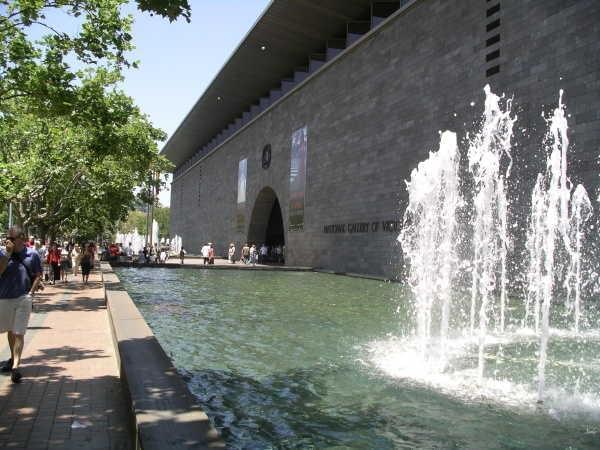
 The NGV, or National Gallery of Victoria, is the most important museum in Melbourne and undoubtedly one of the most prestigious in Australia, exhibiting more than 60,000 works from the country and the rest of the world. It is divided into two sections, NGV International and NGV Australian, which are housed in neighbouring but separate buildings, organised by geographical origin of the works on display, as well as by artistic category.
What to see and how to visit the National Gallery of Victoria
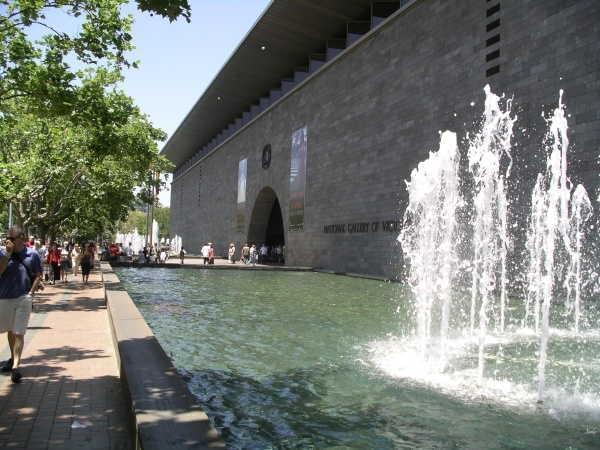 The National Gallery of Victoria, also known by its acronym NGV is one of Australia's most important museums and is divided into two sections, each located in a separate building: NGV Australia and NGV International.
The two structures are 800 metres apart and are not connected: visiting both complexes, one encounters ten pavilions, subdivided by origin of the works or by artistic category.
Specifically, the thematic areas are as follows: Asian art, Australian art, contemporary art, decorative art, contemporary architecture and design, fashion and textiles, indigenous art, international art, photography, prints and drawings.
The gallery also constantly hosts several temporary exhibitions, so please check the museum's website during your stay in Melbourne to keep up to date with current events.
In the meantime, we suggest the ten most important works on permanent display.
Where to stay in Melbourne
When it comes to finding the perfect place to stay in Melbourne's vibrant heart, the Ibis Budget - Melbourne CBD Hotel stands out as a convenient and affordable choice. This hotel strikes a balance between comfort and budget-friendliness, making it an ideal option for travelers seeking accessibility without compromising on quality.
For a comprehensive selection of accommodations throughout Victoria, take a look at the range of options available at tophotels.com. This platform offers a diverse array of hotels to suit various preferences and budgets, ensuring that every traveler finds the perfect fit.
Traveling with the whole family? Victoria boasts an assortment of welcoming family-friendly aparthotels that provide ample space and amenities to ensure a comfortable stay for all. These Melbourne Family Aparthotels offer the convenience of home, making them a fantastic choice for those exploring Victoria with loved ones.
Whether you're seeking affordability, a wide range of options, or accommodations that cater to your family's needs, Victoria has it all. From budget-friendly options like the Ibis Budget - Melbourne CBD Hotel and the family-friendly apart-hotels, your stay in Melbourne will be nothing short of exceptional.
1 - The Weeping Women
The portrait of this woman belongs to the theme realised by the same author in Guernica and reflects a detail taken from the great painting itself: the pain of war and the heartbreak of a woman who, in an attempt to escape the bombing, clutches her dead son to her breast.
Author: Pablo Picasso
Year of production: 1937
Location: NGV International
2 - Self-Portrait
Warhol's self-portrait, made a few months before his death, challenges the laws ofexpressionism, adopting a more superficial approach to art: in this work, emotions are missing and the author appears as a disembodied, almost ghostly mask.
Author: Andy Warhol
Year of production: 1986
Location: NGV International
3 - Cleopatra's Banquet
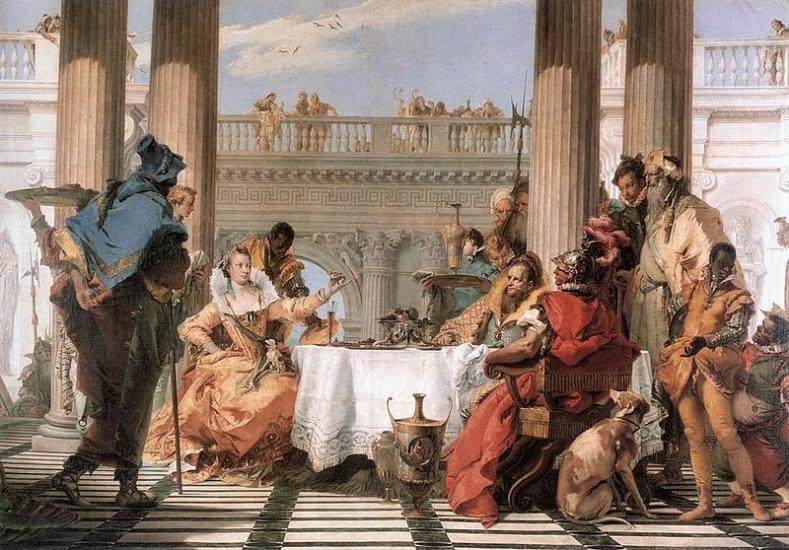 The first of three large paintings executed with the technique of oil painting, with this work the author wanted to pay homage to the king of Poland, Augustus III, by creating a painting that could enrich the palace in Dresden.
Author: Gianbattista Tiepolo
Year of execution: 1743-1744
Location: NGV International
4 - Untitled (Red)
Although this painting is intermediate in size and characterised by the use of a single colour, it succeeds in engaging viewers thanks to the various pigments of red, which create movement and seem to embrace the viewer.
Author: Mark Rothko
Year of execution: 1956
Location: NGV International
5 - Void (Koku)
A three-dimensional form made of woven bamboo, which gives a feeling of structural solidity despite the lightness of the natural materials used.
Author: Noriyoshi Sugiura
Year of creation: 1964
Location: NGV International
6 - Flannel flowers
A typical Australian flower, created by the painter who specialised in the art of still life and modernism, who believed that every artist in the country should be inspired by typical Australian subjects.
Author: Margaret Preston
Year made: 1938
Location: NGV Australian
7 - Swanston Street fron the Bridge
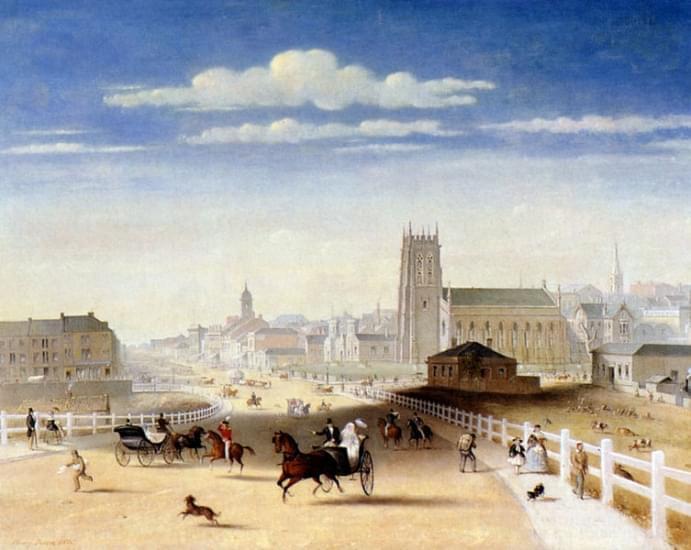 This view of the landscape, although still recognisable today, actually depicts elements that are no longer there, such as St Paul's Church, demolished in 1855 to make way for the present cathedral.
Author: Henry Burn
Year of creation: 1861
Location: NGV Australian
8 - Tingarri Dreaming at Tingarritjarra
This is a depiction of a swamp, where several men of the Tingarri tribe would camp and gather to perform rituals, before migrating eastwards.
Author: Ronnie Tjampitjinpa
Year of creation: 1993
Location: NGV Australian
9 - Tapu
In this painting, the artist depicts Tapu, her place of origin, where she lived with her parents until their death: through patches of colour, she expresses sandy hills and perforated rocks.
Author: Wakartu Cory Surprise
Year of creation: 1995
Location: NGV Australian
10 - Collins St. 5 p.m.
A depiction of everyday, small-town life in 1950s Melbourne, depicted through a monochrome parade of commuters leaving work, which still seems very relevant today.
Author: John Brack
Year of production: 1955
Location: NGV Australian
Hours and prices
Hours: Both venues are open daily, 10am to 5pm. Closed 25 December. Opening hours for Anzac Day, 13:00 - 17:00
Best time to avoid queues: before 11:00 am
Ticket price: free at both venues
Online tickets and guided tours
Useful tips for visiting the attraction
Getup early: Ideally you should get to the entrance by 10:00am, especially if you want to enjoy the museum on your own, as tours start at 11:00am and there may be more crowds.
Temporary exhibitions: Although access to the museum is free of charge, an entrance fee may be required during temporary exhibitions.
Watch out for restrictions: water or food is not allowed in some attractions and museums - make sure you don't take any with you.
Minimumtime: we recommend a minimum of four hours for your visit. Ideally, you should be able to dedicate a couple of hours per building.
Where is it located and how to get to NGV International
Onfoot: 180 St Kilda Road, less than a kilometre from the Melbourne Botanic Gardens and Temple of Remembrance - Get directions
Bytram: with tram lines 1, 3, 5, 6, 8, 16, 64, 67, 72 - stop Arts Centre
Bytrain: stop at Flinders Street and cross the bridge over the Victorian Arts Centre
Where is it located and how to get to the NGV Australian
Onfoot: Federation Square, 100 metres from Princess Bridge and 250 metres from St. Paul's Cathedral - get directions
Bytram: tram lines 1, 3, 5, 6, 8, 16, 64, 67, 70, 72, 75 and City Circle - Flinders Street stop
Bytrain: Flinder Street stop, adjacent to Federation Square
History and interesting facts: what to know in brief
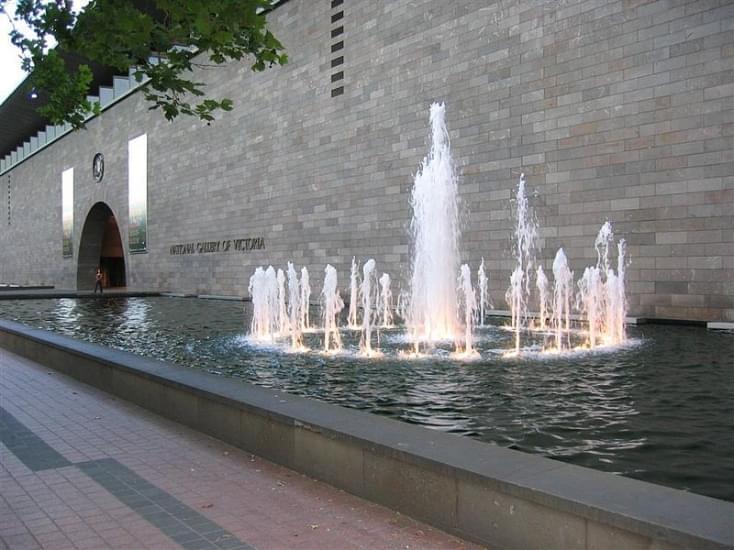 The museum, founded in 1861, preserves and displays more than 60,000 works from different cultures and eras. Most of the collections come from state purchases or donations.
The historical location of the NGV is on St. Kilda Road. Only later was the section in Federation Square added, with works dedicated to Australian art.